The federal ban on large institutional investors buying single-family homes takes effect on January 7, 2027. It is not in effect today. The 21st Century ROAD to Housing Act became law on July 11, 2026, and the investor provision inside it carries a 180-day delay written into the statute. Every house a corporate landlord buys between now and January 6 is lawful, and nothing in the law requires them to sell it afterward.
A surprising amount of the coverage ran past that. CNBC's July 21 story is headlined “Wall Street is selling more rental homes, as buying ban takes effect.” Mortgage Professional called it an exodus that “kicks in.” HousingWire headlined restrictions that “take effect.” The reporting underneath all three is solid. The headlines put the wall six months early.
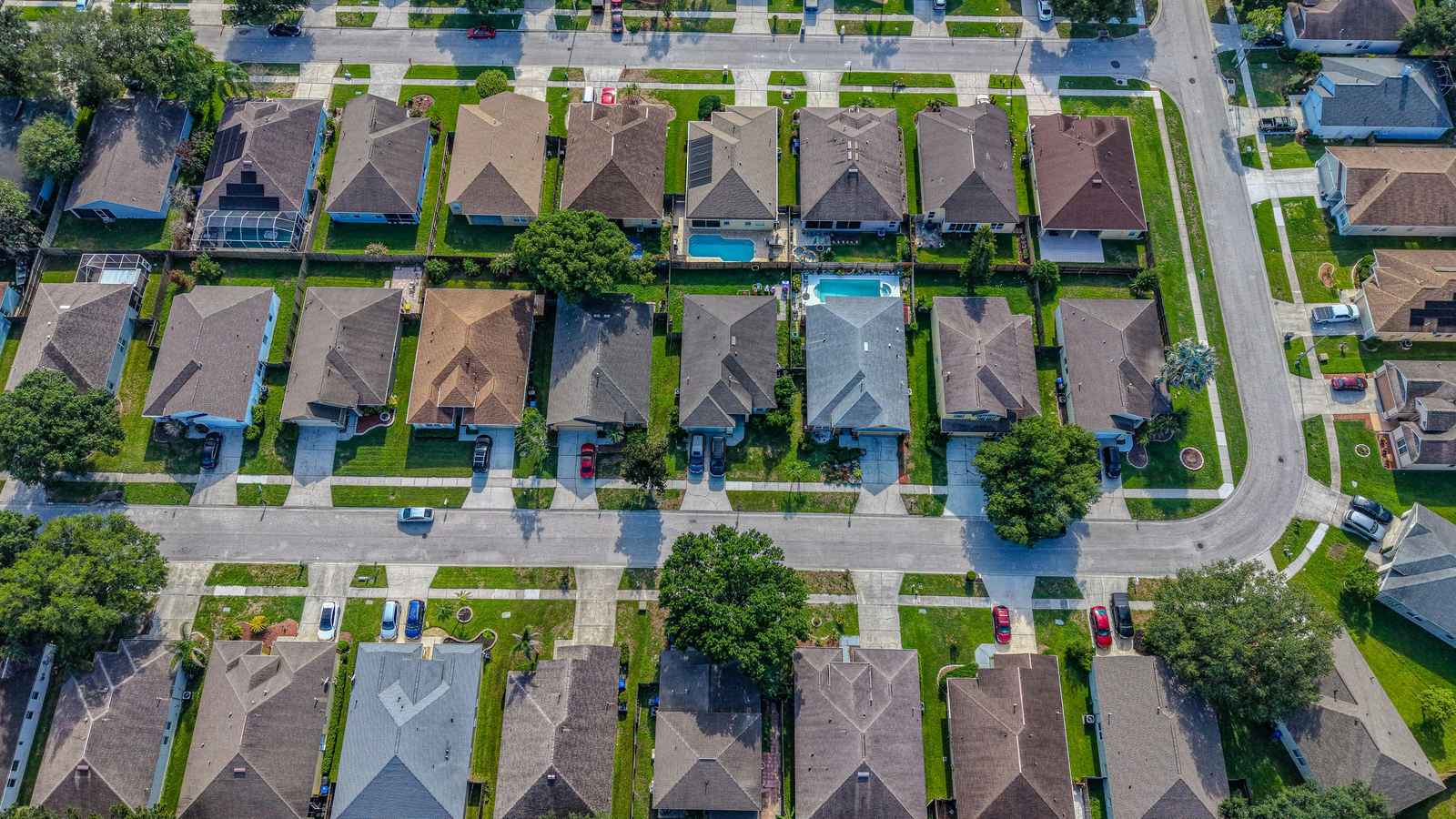
For Tampa Bay the honest read is: real, concentrated, and smaller than it sounds here. Tampa is one of six metros holding more than a third of every institutionally-owned home in the country. But Pinellas is the lightest of the three counties in this market, and the law leaves roughly 91 percent of investor-owned houses untouched entirely. This is a Pasco and Hillsborough story more than a St. Petersburg one.
I am Jesse Battle IV — fourth-generation St. Petersburg native, Florida Certified General Contractor since 2003, REALTOR with Team Kym Coyle at Charles Rutenberg Realty. Here is what the statute says and what the data underneath the headlines shows.
What the law covers, in one pass
The provision is Section 1001 of Title X, “Homes are for people, not corporations,” codified at 42 U.S.C. 19521. A large institutional investor is a for-profit entity with investment control of 350 or more single-family homes. A single-family home is a structure with two or fewer dwelling units — a duplex counts — and manufactured homes are excluded. Purchase is written broadly: mergers, bulk deals, foreclosures, whether or not for cash. The ban also reaches entering into a contract to buy, not only closing.
There are eleven exceptions, lettered (A) through (K). Build-to-rent is exempt outright, along with renovate-to-rent at 15 percent of purchase price in improvements, rent-to-own and homeownership programs, foreclosure acquisitions, purchases from another covered investor, and 55-and-older communities. An earlier Senate draft would have forced sales inside seven years; it was cut before passage. Treasury writes the rules but cannot move the 350 number.
What the law does not do
- Reach anyone under 350 homes — nearly every investor operating in Pinellas.
- Require any existing home to be sold. No divestiture provision, no retroactivity.
- Restrict build-to-rent, the format most new institutional rental supply now takes.
- Cover manufactured homes, or buildings with three or more units.
- Apply to anything bought before January 7, 2027. The ban also repeals itself fifteen years after that date unless Congress extends it.
Why the date is the story right now
Read the two halves together: the ban starts January 7, and nothing requires selling. A house bought in September 2026 is lawfully acquired and lawfully held for as long as the owner wants it. One question is genuinely open — the statute's express no-divestiture language covers homes bought before enactment, so how window purchases get counted may fall to Treasury's rulemaking. But no divestiture mechanism exists in the statute for anyone to reach for.
And because the ban covers contracts rather than closings, an investor who wants one more house has to sign before January 7, not merely close before it. If there is a rational last call, it happens this quarter and next.
The counterweight: this law is smaller than its headlines
Mega-investors own about 0.66 percent of American single-family homes. The full set of investors subject to this law holds roughly 589,000 houses, around 3.9 percent of the country's single-family rentals. CNN's read the day after enactment was that a measure aimed at a slice that size is unlikely to move affordability much, and I think that is right.
The bigger reason is who it leaves alone. Owners of one to ten properties account for about 91 percent of investor-owned homes, and an investor with 349 houses is outside the statute entirely. If your model is that investors compete with first-time buyers for entry-level inventory, this law addresses the smallest part of that competition.
What the selling data shows
Institutions are listing more. Parcl Labs counted 9,447 homes on the market from covered investors, up from 4,166 at the start of February. All seven of the largest landlords — Progress Residential, Invitation Homes, AMH, Tricon, FirstKey, Amherst, and VineBrook — are net sellers this year, by 3,180 homes since January 1.
Now divide. Those same seven still own roughly 400,000 houses between them. Net selling of 3,180 is under one percent of the portfolio. This is a trim, not a liquidation, and it is lopsided: VineBrook has about 1,900 homes listed, close to a tenth of everything it owns, while Progress Residential — the largest owner of the group — has 143. Six are pruning. One is retreating.
Where it does read as motivated selling is price. 54 percent of institutional listings carry a markdown against 38.7 percent of all listings nationally, and those markdowns deepened from about 3.1 to 4 percent of asking since early May. That is a seller working to a disposition schedule, not a price target — the part of this data a buyer can use.
Tampa Bay, and what “investor-owned” actually means here
Six metros — Atlanta, Charlotte, Dallas–Fort Worth, Houston, Phoenix, and Tampa — hold 36.8 percent of every home owned by institutional investors with portfolios above 1,000 houses, according to Parcl Labs. Six out of nearly 400. Modest nationally, visible in the few markets where these landlords built large positions. Around half of Tampa's institutionally-owned homes were bought after December 2019 — a pandemic-era position, in a metro that has since given back ground.
Locally, though, be careful with the number everyone quotes. The University of Florida's Shimberg Center analyzed 2023 property records and put investor-owned share at 8.5 percent of homes in Hillsborough, 8 percent in Pasco, and 6.5 percent in Pinellas. That dataset counts every investor: the LLC that owns two rentals in Kenwood is in it alongside Progress Residential. The institutional slice this law actually covers is a fraction of that fraction. The identified hotbeds are south St. Petersburg, the Ybor City area, west Pasco, and south Hillsborough.
We are a built-out peninsula with older stock, higher prices, and far less of the new suburban tract product institutions buy in bulk. South St. Pete is the one place in this county where the concentration is dense enough that a disposition wave would show at the neighborhood level.
If you rent from one of these companies
Here is the provision nobody is covering. By January 7, 2027, HUD must stand up a renter outreach resource — a toll-free number and a public website — for tenants of large institutional investors to report and resolve disputes, including potential violations of federal law. Every covered landlord must give each renter written notice of it at move-in and annually after, name a specific person responsible for disputes with a phone number and email, and post it prominently on its website. HUD reports the complaints to Congress each March 31. If you rent from a national landlord, that notice should reach you next year. Keep it.
On either side of a deal
Buying. An institutional seller is the least emotional counterparty you will negotiate against. They will not be insulted by your number and will not fall in love with your letter. Ask how long the house has been in the portfolio and whether it is vacant.
Then look at the house properly. A home that spent six or seven years as a corporate rental has a specific wear profile. Turn-based maintenance refreshes cosmetics at every tenant change while expensive systems get repaired only when they fail: original HVAC past service life with fresh paint over it, roofs carried to the edge of insurability, and the Florida particulars — failed window and door sealant, soft subfloor at wet walls, condensate lines quietly overflowing for years. Pull the permit history. Vendor-managed repairs at scale are not always permitted repairs, and an unpermitted panel change becomes your problem at resale.
Selling. Do not price against an institutional comp without asking who sold it. Portfolio closings at a 4 percent markdown off an already-cut ask sit in the same data an appraiser pulls, with no note explaining that the seller was clearing a balance sheet.
The likely medium-term outcome is not less institutional rental housing in Tampa Bay. Exception (B) is a wide door and the Pasco corridor has the land to walk through it, so it becomes rental housing built new instead of bought used. The ban is narrower than the coverage, it starts in January, and in Pinellas it is a modest story. Less exciting than the headline, and what the statute says.
Sources: Public Law 119–101, the 21st Century ROAD to Housing Act, Title X, Section 1001 (42 U.S.C. 19521) — definitions, excepted purchases, the prohibition, and the effective-date and repeal provisions in subsection (f) are taken from the enrolled text; Executive Order 14376, January 20, 2026; Parcl Labs listing and disposition data as reported by CNBC, July 21, 2026; CNN Business on ownership share and affordability, July 2026; HousingWire on the localized nature of the impact; Parcl Labs metro concentration data via ResiClub; University of Florida Shimberg Center for Housing Studies analysis of 2023 property records, as reported by WUSF — those county figures cover investors of all sizes, not only entities this law reaches. General information about a statute and a market, not legal, tax, or investment advice. Treasury's implementing regulations may change how these provisions apply; confirm the current rules and any specific transaction with your own counsel.